China Is Building the Workforce of Tomorrow as Humanoid Robots Begin Learning Real Jobs
From factories and restaurants to household tasks, China is rapidly training AI powered humanoid machines as part of a broader strategy to lead the future of robotics
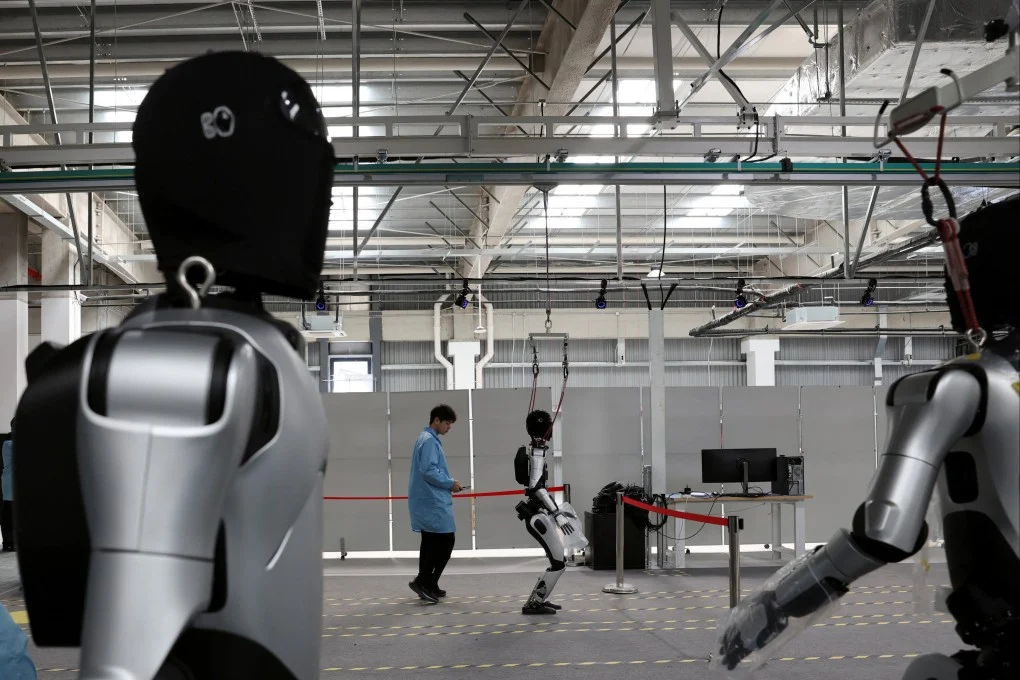
Photo: South China Morning Post
China is accelerating one of its most ambitious technological projects yet: preparing humanoid robots to eventually work alongside people across industries. Inside specialized robot training centers, engineers and instructors are spending long hours teaching machines how to perform real-world tasks ranging from factory operations to customer service and household work.
What may have once looked like science fiction is becoming part of a broader national strategy aimed at turning humanoid robotics into a major pillar of economic and industrial growth.
The effort goes beyond building robots that can walk or speak. China is attempting to create machines capable of understanding environments, adapting to tasks, and eventually operating independently across workplaces.
China Is Treating Humanoid Robotics as a Strategic Industry
China has increasingly focused on technologies considered critical for long-term global competitiveness.
In previous years, the country aggressively expanded support for:
• Electric vehicles
• Artificial intelligence
• Semiconductor development
• Renewable energy technologies
• Advanced manufacturing
Humanoid robotics is now becoming part of that next wave.
Chinese policymakers have identified humanoid robots as a strategic industry through the end of the decade, aiming to strengthen the country's position in global supply chains and future technology markets.
The broader objective extends beyond creating robots for entertainment or demonstrations.
Instead, the goal is to build a scalable industry capable of supplying machines for manufacturing, logistics, retail, healthcare, and service sectors worldwide.
Inside China's Robot Training Centers
In Beijing and other major cities, specialized robot learning facilities are functioning almost like schools for machines.
At these centers, human instructors repeatedly guide robots through tasks while artificial intelligence systems collect and process data.
Unlike traditional software programming, these systems rely heavily on observational learning.
Humans physically demonstrate actions while sensors, cameras, and motion tracking systems record every movement.
Once enough data is collected, AI systems begin identifying patterns and eventually learn to repeat actions independently.
Training currently includes practical workplace activities such as:
• Sorting products on factory lines
• Housekeeping duties
• Organizing retail shelves
• Massage services
• Repair work
• Food preparation
• Handling delicate objects
Some instructors spend entire workdays repeating identical movements.
Training sessions often involve approximately eight hours of repetitive actions per day, creating large datasets that help improve robot performance.
Humans Are Still Teaching the Machines
Despite rapid advances in AI, many humanoid robots remain heavily dependent on human guidance.
Instructors often begin with complete manual control because robots initially have little understanding of their surroundings.
As actions are repeated, the system gradually converts movements into machine learning data.
The process resembles how people learn new skills through practice and repetition.
For human trainers, however, the work can be physically demanding.
While robots can repeat the same action thousands of times without fatigue, human instructors face a very different reality.
The irony is becoming increasingly visible: people are spending long hours teaching future machines how to reduce repetitive human labor.
Robotic Hands Have Become One of the Biggest Challenges
One of the most technically difficult areas in robotics development involves creating hands capable of human-like movement.
Human hands perform highly complex actions involving precision, pressure control, and coordination.
To train robotic hands, developers are using:
• Motion capture systems
• Advanced sensors
• Pressure mapping technologies
• AI learning algorithms
• Real-time movement tracking
Some robotic systems reportedly require approximately 10,000 training repetitions simply to learn a single new skill effectively.
Current robotic hand capabilities include handling extremely delicate tasks such as:
• Picking up eggs
• Holding strings
• Grasping small objects
• Sorting items by size
Although these actions may appear simple for humans, they represent major technical achievements for robotics systems.
China Faces Strong Global Competition
China's progress in humanoid robotics has drawn global attention and increased competition among technology companies.
One of the most closely watched rivals is Tesla and its humanoid robot project known as Optimus.
Robotics development increasingly centers on solving several difficult challenges:
• Hand coordination
• Object recognition
• Independent movement
• Environmental awareness
• Decision-making ability
Industry leaders have repeatedly acknowledged China's strengths in manufacturing scale and production efficiency.
China's ability to rapidly manufacture and deploy technology at large scale could become a major advantage if humanoid robots reach commercial adoption.
Robots Are Already Entering Real Work Environments
Training no longer happens only inside research centers.
Humanoid and AI-powered robots are increasingly receiving trial runs in real-world settings.
Current test roles include:
• Restaurant chefs
• Bartenders
• Customer service workers
• Retail assistants
• Traffic management support
• Convenience store operations
• Manufacturing support
While many systems still require monitoring and human assistance, developers believe this dependency will gradually decrease as machine learning models improve.
The Goal Is Not Full Human Replacement
Supporters of humanoid robotics argue that the long-term objective is not widespread job replacement but rather workforce support.
Developers increasingly describe robots as tools designed to handle tasks that are:
• Dangerous
• Repetitive
• Physically demanding
• Undesirable for workers
• High risk environments
Examples include industrial repair, hazardous material handling, heavy lifting, and repetitive factory labor.
However, debates continue regarding how automation may reshape employment patterns over the coming decade.
Why China's Robot Push Matters
China's investment in humanoid robotics represents more than a technology experiment.
It reflects a broader attempt to define the next era of industrial leadership.
As artificial intelligence, automation, and robotics become increasingly interconnected, countries leading these industries may gain significant advantages across manufacturing, supply chains, and economic growth.
Today, many robots still require human teachers.
But the long-term vision being built inside China's robot training centers is a future where machines learn, adapt, and eventually become active participants in the workforce itself.

.png)