Reliance Industries Faces Its Toughest Test at Home Despite Global Headwinds
Slowing retail growth, cautious consumers, and broker downgrades are emerging as bigger risks than geopolitics for India’s most valuable conglomerate
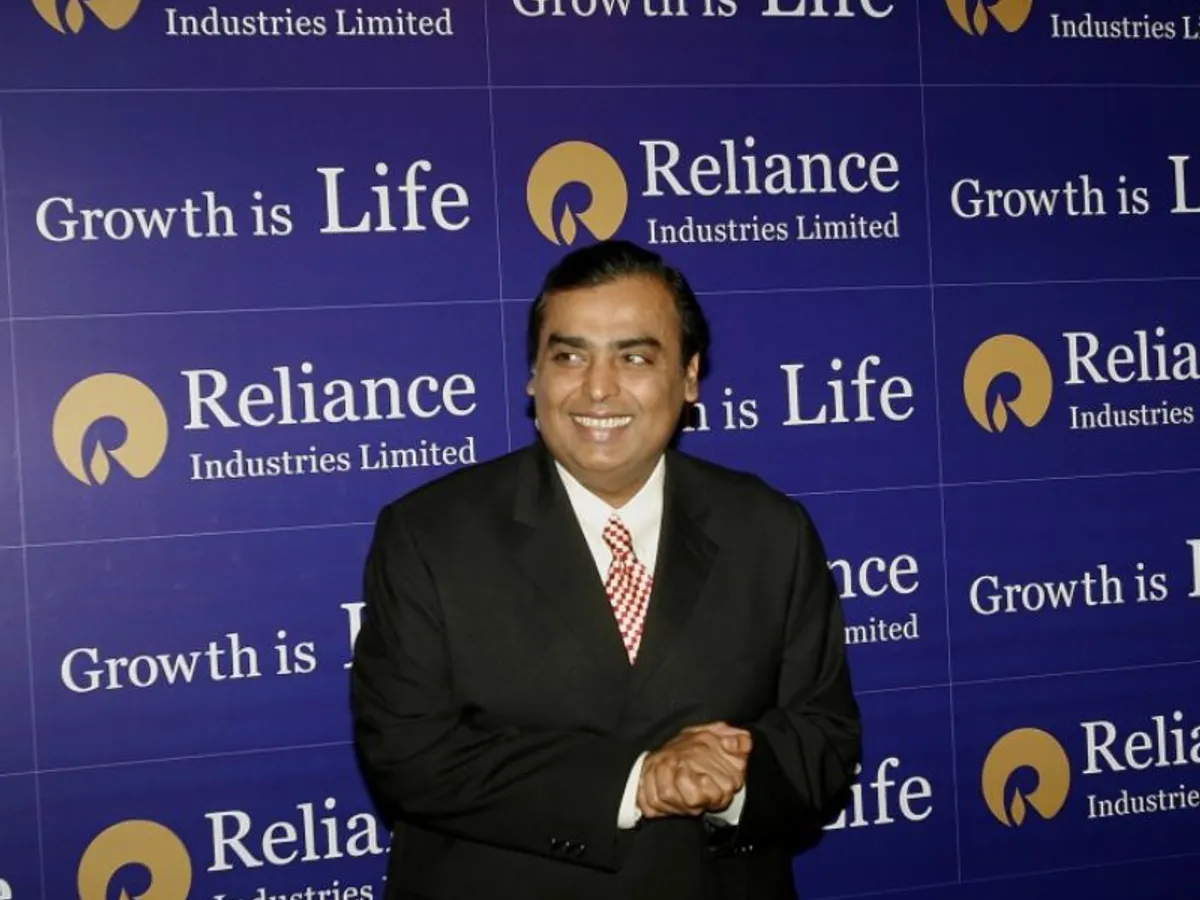
Reliance Industries, India’s largest company by market capitalization, is navigating a complex mix of global disruptions and domestic pressures. While geopolitical tensions have complicated its oil sourcing strategy and raised questions around its new energy ambitions, analysts increasingly believe the group’s most immediate challenge lies closer to home: a sharp slowdown in its retail business.
The moderation in Reliance Retail’s growth has prompted leading global brokerages to lower earnings estimates and cut target prices for Reliance Industries shares. This has happened even as most analysts continue to maintain a long-term buy rating on the stock, reflecting confidence in the conglomerate’s diversified business model but concern over near-term execution.
Retail slowdown triggers valuation concerns
Reliance Retail, the group’s third-largest business after energy and telecom, reported a visible deceleration in its latest quarterly results. Revenue rose just 8.1 percent year on year, while EBITDA growth was limited to approximately 2 percent. For a business that has historically delivered double-digit growth and has been positioned as a major long-term value driver, these numbers unsettled investors.
At the company’s annual general meeting last year, Isha Ambani, who leads the retail vertical, had reiterated management’s ambition to deliver more than 20 percent compound annual growth in retail revenues over the next three years. The latest results, however, have raised doubts about the pace at which that target can be achieved in the current consumption environment.
Macquarie Capital recently removed Reliance Industries from its Asia Marquee list, noting that Reliance Retail has become a key swing factor in the group’s sum-of-the-parts valuation. The brokerage flagged the loss of growth momentum in retail as a central risk to upside potential in the stock.
Brokerages cut targets, trim earnings forecasts
Several global investment banks have revised their outlook following the earnings announcement. Citi reduced its target price on Reliance Industries to 1,815 rupees per share from 1,860 rupees, while UBS lowered its target to 1,790 rupees from 1,820 rupees. UBS had previously expected the retail segment to grow at around 10 percent year on year in the December quarter, a forecast that now appears optimistic.
Citi has also cut its consolidated EBITDA estimates for Reliance Industries for financial years 2026 through 2028 by 1 percent to 2 percent, citing sustained moderation in the retail business rather than a one-off quarterly weakness.
Since the earnings release, Reliance Industries shares have declined by nearly 5 percent, underperforming the broader market despite relative resilience in its energy and telecom operations.
Uneven consumption recovery weighs on retailers
The slowdown in Reliance Retail reflects broader trends in India’s consumer economy. In September, the government reduced goods and services tax rates in select categories in an effort to stimulate domestic demand ahead of the festive season. While this move did support discretionary spending in some segments, the recovery has been uneven.
Sales of gold and automobiles improved in the December quarter, but categories such as fashion, apparel, and consumer staples recorded softer growth. This divergence has affected large-format retailers and omnichannel players that rely on volume-driven expansion.
Bernstein, in a recent note, said it does not see any strong near-term catalyst for a sharp rebound in consumer demand and expects 2026 to begin on a cautious note. The brokerage anticipates only a gradual recovery, rather than a dramatic upswing, even if the impact of recent stimulus measures is felt with a delay.
Peers such as Avenue Supermarkets, which operates DMart, and Tata Group’s Trent have also reported slower growth during the same period, reinforcing the view that the slowdown is sector-wide rather than company-specific.
Accounting changes add complexity to comparisons
Reliance Retail has argued that its year-on-year comparisons are distorted due to structural changes within the business. Its consumer staples arm was demerged and is now a direct subsidiary of Reliance Industries, making historical comparisons less straightforward.
In the December quarter, the consumer staples business reported gross revenue of approximately 50.65 billion rupees, equivalent to about 556.8 million dollars. This accounted for roughly 5 percent of Reliance Retail’s total revenue of 976 billion rupees for the quarter. While the contribution remains relatively small, analysts are closely watching how this segment scales over time amid intense competition from established FMCG players.
Despite these clarifications, most brokerages view the slowdown as more structural than temporary, driven by maturing urban markets, rising competition, and cautious discretionary spending.
Energy business absorbs geopolitical shocks
Outside retail, Reliance Industries has also been dealing with global geopolitical pressures, particularly in its oil-to-chemicals business. The company was forced to reduce imports of discounted Russian crude after the United States imposed sanctions on major Russian oil producers, including Rosneft and Lukoil. One of these firms had a long-term supply arrangement with Reliance.
At its peak, Russian oil accounted for approximately 40 percent to 45 percent of Reliance’s crude intake, according to estimates from Rystad Energy. Despite the reduction in cheaper feedstock, the oil-to-chemicals segment delivered a resilient performance. EBITDA from the segment rose 15 percent year on year, supported by strong refining margins that more than offset higher freight costs and weakness in petrochemicals.
This performance has reassured analysts that Reliance’s core energy operations remain robust even in a volatile global environment.
New energy plans under scrutiny
Geopolitical tensions have also cast a shadow over Reliance’s new energy ambitions. A recent media report suggested that the company had paused plans for a 40-gigawatt battery storage plant due to challenges in sourcing technology from China amid tightening export controls.
Reliance has publicly denied any delays. Senior management has stated that the battery storage project is progressing as planned and that commissioning will take place over the next few quarters. Nevertheless, investors are watching closely, given the strategic importance of new energy investments to Reliance’s long-term transition strategy.
Telecom remains the most stable pillar
In contrast to retail and new energy, Reliance’s telecom arm continues to deliver steady and predictable growth. The business reported a 12.7 percent year-on-year increase in revenue and a 16.4 percent rise in EBITDA during the quarter. It added 8.9 million subscribers, taking its total user base to approximately 515 million.
With a potential listing expected this year, the telecom unit is increasingly viewed as the group’s most stable and transparent value driver, largely insulated from fluctuations in consumer sentiment and geopolitical risk.
The bigger picture for investors
Reliance Industries remains one of India’s most diversified and strategically important corporate groups, with leadership positions across energy, retail, telecom, and emerging green technologies. However, the recent slowdown in its retail business has highlighted the limits of scale-driven growth in a softer consumption environment.
For investors, the key question is not whether Reliance can weather short-term headwinds, but how quickly it can reignite growth in its consumer-facing businesses while executing on its long-term energy transition. Until there is clearer evidence of a retail recovery, domestic demand, rather than geopolitics, is likely to remain the dominant factor shaping the company’s valuation trajectory.



.png)