South Korean Defense Stocks Rally as Middle East Demand Outlook Brightens After Iran Conflict
Investors bet on a revival of defense exports as regional governments prepare to strengthen military capabilities and restart delayed procurement programs
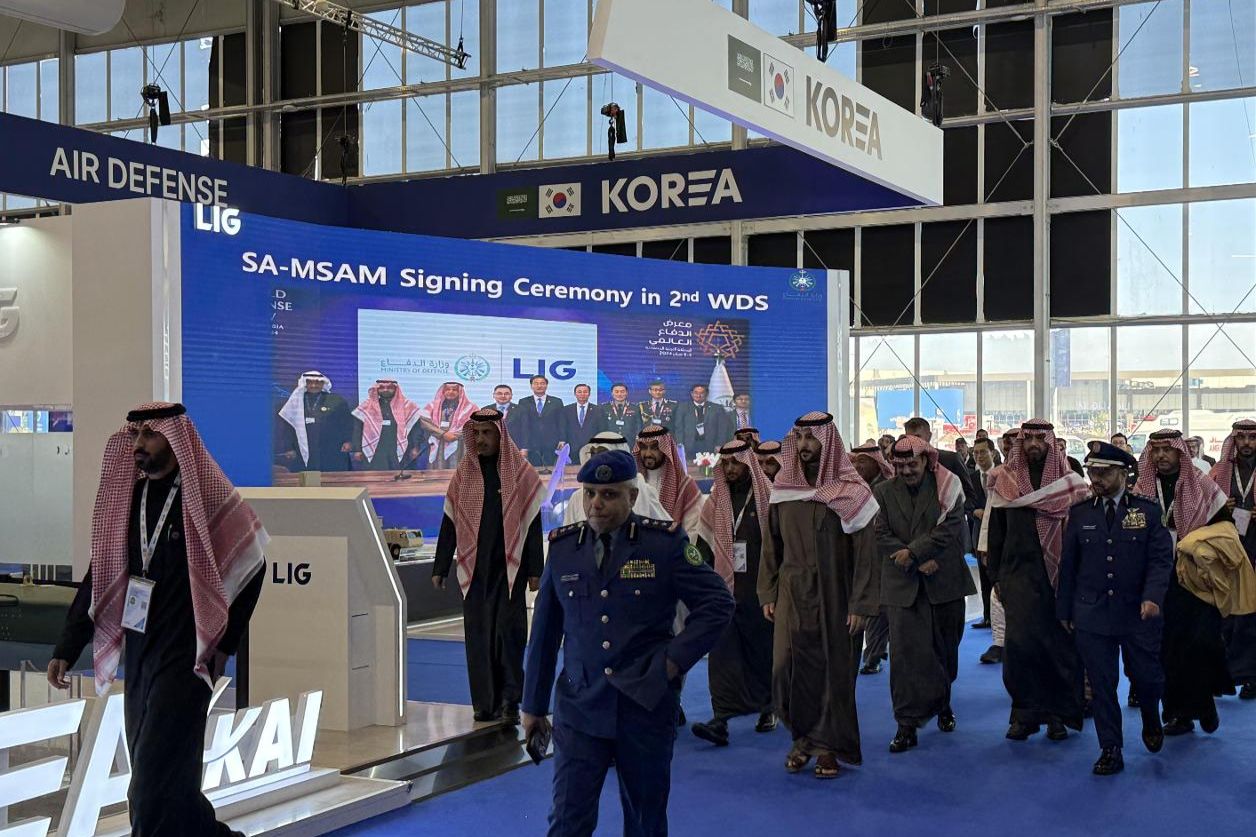
Photo: The Korea Times
South Korea’s defense sector delivered one of the strongest performances in the market as investors rushed into military-related stocks on expectations that the end of the Iran conflict could unlock a new wave of defense contracts across the Middle East.
Shares of the country’s leading defense manufacturers surged as traders anticipated the resumption of stalled negotiations, renewed military procurement plans, and stronger demand for advanced weapons systems from Gulf nations seeking to strengthen their security infrastructure.
The rally highlights growing confidence that South Korea’s defense industry, already one of the fastest-growing arms exporters in the world, could be entering another period of significant expansion.
Defense Stocks Lead the Market Higher
South Korean defense companies posted double-digit gains as optimism spread across the sector.
Among the biggest movers:
- Hanwha Aerospace climbed as much as 11.8%
- Hyundai Rotem surged up to 12.7%
- LIG Defense & Aerospace nearly reached the Kospi's daily 30% trading limit
- Firstec, a supplier of military vehicle components, also approached the maximum daily gain threshold
The sharp rise reflected investor expectations that defense export activity, which slowed amid regional instability, could accelerate once geopolitical conditions normalize.
Market participants increasingly believe that countries across the Middle East will move forward with delayed procurement decisions and defense modernization projects that had been temporarily put on hold during the conflict.
Why Investors Are Turning Bullish on Korean Defense Firms
Analysts say the recent rally is driven by expectations that military spending across the Middle East will remain elevated even after hostilities subside.
Rather than reducing defense budgets, many governments in the region are expected to accelerate investments in air defense systems, armored vehicles, missile interception technology, surveillance capabilities, and advanced military infrastructure.
For South Korean defense manufacturers, this creates a significant opportunity.
Over the past decade, South Korea has emerged as a major global arms exporter, competing directly with traditional suppliers from the United States, Europe, and Russia.
The country’s defense products have gained popularity because they offer:
- Competitive pricing
- Advanced technology
- Faster delivery schedules
- Proven operational performance
- Flexible customization options
As a result, Korean defense exports have expanded rapidly across Europe, Asia, and the Middle East.
Hanwha Aerospace Positioned for Major Gulf Contracts
Among the sector’s leading players, Hanwha Aerospace is attracting significant investor attention due to ongoing discussions with several Middle Eastern countries.
The company has been actively expanding its international footprint through artillery systems, armored vehicles, missile technologies, aerospace solutions, and integrated defense platforms.
Industry observers believe negotiations with Saudi Arabia, which experienced delays during the conflict period, could regain momentum in the coming months.
If discussions progress successfully, potential agreements could represent billions of dollars in future revenue opportunities for the company.
Hanwha has become one of South Korea’s flagship defense exporters and continues to strengthen its position as governments worldwide increase military spending amid rising geopolitical uncertainty.
Hyundai Rotem Eyes Large Tank Export Opportunity
Another major beneficiary of renewed optimism is Hyundai Rotem, the manufacturer of the K2 Black Panther main battle tank.
The company is reportedly pursuing a significant export opportunity involving up to 250 tanks for Iraq, a deal that could become one of the largest armored vehicle contracts in the region.
The K2 Black Panther is widely regarded as one of the world's most advanced main battle tanks, featuring:
- Advanced fire-control systems
- High mobility capabilities
- Enhanced armor protection
- Modern battlefield networking technologies
To further strengthen its competitiveness in Gulf markets, Hyundai Rotem has developed the K2ME, a Middle East-specific version of the tank tailored for desert environments and regional operational requirements.
Defense analysts believe the completion of the K2ME program improves the likelihood of securing contracts from Gulf nations seeking modern armored platforms.
Many industry observers now expect key export decisions to emerge during late 2026 or early 2027 as negotiations resume.
LIG Defense Gains Attention After Air Defense System Performance
LIG Defense & Aerospace has also become a focal point for investors following increased attention on its Cheongung air defense system, commonly known as the M-SAM.
The system has gained international visibility because of its ability to intercept incoming missile threats while offering a more cost-effective alternative to some competing Western platforms.
Defense analysts have frequently compared the M-SAM's capabilities with advanced missile defense systems used by NATO allies and Middle Eastern partners.
One factor driving interest is cost efficiency.
Industry estimates suggest interceptor missiles used by the Cheongung system can provide comparable defensive capabilities at significantly lower costs than some rival systems, making them attractive to countries seeking to expand air defense coverage without dramatically increasing military expenditures.
As missile defense becomes a growing priority across the Middle East, demand for such systems could continue to rise.
Middle East Remains a Critical Growth Market
The Middle East has become one of the world's largest defense procurement regions.
According to international defense spending trends, Gulf nations collectively spend tens of billions of dollars annually on military modernization, air defense systems, missile interception technologies, armored vehicles, and advanced security infrastructure.
Several factors continue to support long-term defense demand:
- Regional security concerns
- Missile and drone threats
- Infrastructure protection requirements
- Military modernization initiatives
- Strategic competition among regional powers
These drivers are expected to remain in place regardless of short-term changes in geopolitical tensions.
As a result, many investors view defense spending in the region as a structural trend rather than a temporary response to a single conflict.
Long-Term Demand Drivers Remain Strong
While the end of the Iran conflict has improved near-term sentiment, many portfolio managers argue that the investment case for South Korean defense companies extends far beyond recent events.
Global military expenditures have been rising steadily in recent years as governments increase defense budgets amid growing geopolitical uncertainty.
Europe, Asia, and the Middle East have all accelerated military modernization efforts, creating substantial opportunities for defense exporters.
South Korea is particularly well positioned because it combines advanced technology with competitive pricing and strong manufacturing capabilities.
This combination has helped Korean defense firms secure contracts in countries ranging from Poland and Romania to the United Arab Emirates and Saudi Arabia.
As nations seek to diversify suppliers and strengthen defense readiness, Korean manufacturers are increasingly becoming preferred partners.
The Bigger Picture
The sharp rally in South Korean defense stocks reflects growing investor confidence that the sector is entering another phase of export-driven growth. Expectations that Middle Eastern governments will restart delayed procurement programs and expand military modernization efforts have boosted optimism across the industry.
Companies such as Hanwha Aerospace, Hyundai Rotem, and LIG Defense & Aerospace stand to benefit from a potential surge in demand for tanks, missile defense systems, armored vehicles, and advanced military technologies.
While the recent conflict acted as a catalyst for market attention, the broader story remains centered on long-term global defense spending trends. With military budgets rising worldwide and South Korean manufacturers continuing to gain international market share, many investors believe the country's defense industry remains one of the most promising growth sectors in the global industrial landscape.