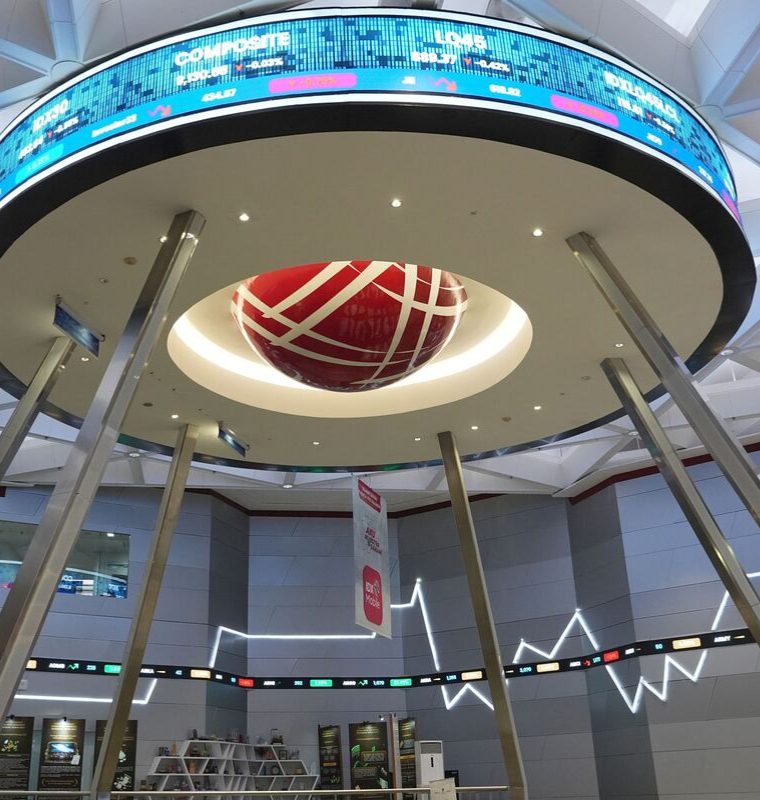
South Korean Stocks Sink Over 4%, Forcing Temporary Trading Halt as Asia Markets Slide
Tech-heavy losses trigger circuit breaker in Seoul while investors digest China factory data and global risk-off signals
.jpg)
Photo: Bloomberg.com
Asia-Pacific markets opened the week under heavy pressure, led by a sharp sell-off in South Korea that briefly halted trading after benchmark indexes plunged more than 4%, underscoring rising global risk aversion amid weakness in commodities, cryptocurrencies, and U.S. equities.
South Korea’s Kospi index slid over 4% in early trading, while Kospi 200 futures dropped as much as 5%, triggering a “sidecar” mechanism that temporarily suspended program trading. The move is designed to curb excessive volatility during periods of rapid market decline.
Technology giants bore the brunt of the sell-off. SK Hynix sank roughly 6.7%, while Samsung Electronics fell about 5.6%, dragging the broader market lower. The small-cap Kosdaq also suffered steep losses, tumbling around 4.45% as risk appetite evaporated across growth-oriented names.
Regional Markets Follow Seoul Lower
The sell-off in South Korea set the tone across Asia.
Hong Kong’s Hang Seng Index declined approximately 1.64%, while mainland China’s CSI 300 slipped around 0.68%. Australia’s S&P/ASX 200 dropped about 1% as miners and financials retreated alongside global markets.
Japan was the notable outlier, with the Nikkei 225 edging up 0.13% and the broader Topix gaining 0.52%, supported by a weaker yen and selective buying in export-linked stocks.
Traders across the region pointed to a combination of global macro uncertainty, falling precious metals prices, and renewed weakness in cryptocurrencies as key drivers of Monday’s cautious tone.
China Factory Data Offers Mixed Signals
Investors also digested fresh private-sector data from China, which showed manufacturing activity gaining modest momentum in January.
The RatingDog China General Manufacturing PMI, compiled by S&P Global, rose to 50.3 from 50.1 in December, matching market expectations and marking the strongest reading since October’s 50.6. A figure above 50 indicates expansion.
The improvement reflected faster production and stronger new orders, as Chinese factories ramped up output and front-loaded shipments ahead of the extended Lunar New Year holiday. However, analysts cautioned that seasonal effects likely played a role, and broader confidence among manufacturers remains fragile.
The data contrasted with China’s official PMI released over the weekend, which showed factory activity slipping into contraction, highlighting uneven conditions across different segments of the economy.
Precious Metals Extend Historic Sell-Off
Gold and silver remained in focus after last Friday’s dramatic plunge, which sent shockwaves through global markets.
Spot gold traded around 5% lower at roughly $4,612 per ounce, while silver fell about 4% to near $81.19 per ounce. The declines followed Friday’s brutal session, when silver collapsed nearly 30% in its worst one-day performance since 1980, and gold dropped about 9%.
The sharp reversal came after weeks of record-setting gains driven by safe-haven demand and speculation over U.S. interest rate cuts. A stronger U.S. dollar and profit-taking have since weighed heavily on both metals, reinforcing the broader risk-off mood.
Bitcoin Slides Below $80,000 as Risk Appetite Fades
Cryptocurrencies also added to the negative sentiment.
Bitcoin fell below $80,000 for the first time since April, signaling that investors were pulling back from speculative assets following the sell-off in precious metals. The world’s largest cryptocurrency was last trading around $76,700, extending weekend losses.
Market strategists noted that the simultaneous declines across equities, metals, and digital assets point to widespread deleveraging as traders reassess exposure to riskier corners of the market.
U.S. Futures Point Lower After Weak Wall Street Finish
U.S. equity futures declined during early Asia hours, suggesting a cautious start to the new month on Wall Street.
Dow Jones Industrial Average futures slipped about 143 points, or 0.3%. S&P 500 futures fell roughly 0.6%, while Nasdaq-100 futures dropped close to 1%, reflecting continued pressure on technology stocks.
Last Friday, U.S. markets closed lower as tech shares stayed under strain, even as investors largely welcomed President Donald Trump’s nomination of Kevin Warsh to lead the Federal Reserve.
The S&P 500 fell 0.43% to end at 6,939.03, marking its third consecutive daily decline, though the index still managed to post a gain for January overall. The Dow Jones Industrial Average eased 0.36% to 48,892.47, while the Nasdaq Composite underperformed, sliding 0.94% to 23,461.82. All three benchmarks dropped more than 1% at their session lows.
Volatility Returns to Global Markets
Monday’s sharp move in South Korean stocks highlights how quickly volatility has returned to global markets, with investors grappling with shifting expectations around U.S. monetary policy, slowing growth signals in parts of Asia, and steep corrections in commodities and crypto.
With multiple asset classes under pressure at once, traders are bracing for continued turbulence in the days ahead, watching closely for signs of stabilization in precious metals, further direction from China’s economy, and whether Wall Street’s tech sector can regain its footing.