Talk of U.S. Control Over Greenland Could Trigger Historic Global Fallout, Arctic Leader Warns
Former Icelandic president cautions that any attempt to seize Greenland would fracture Western alliances and destabilize the global order as Trump intensifies Arctic rhetoric
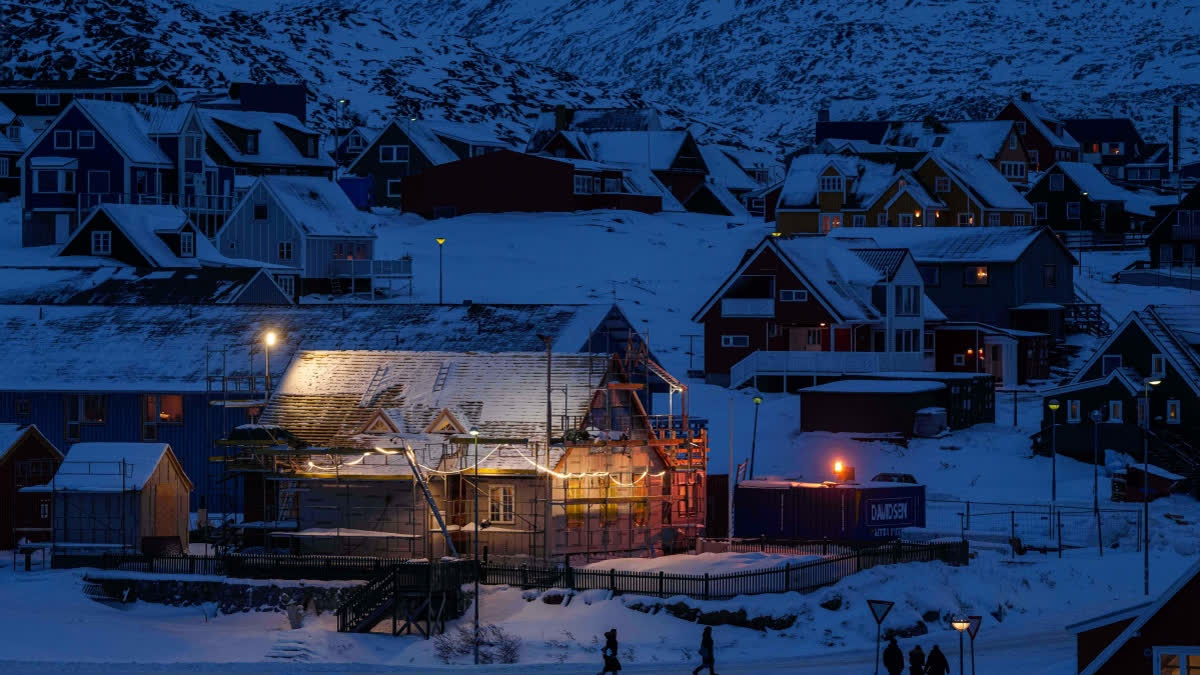
Rising rhetoric from President Donald Trump over U.S. control of Greenland is drawing sharp warnings from Arctic leaders, who say any attempt to take over the territory would unleash consequences far beyond the region and reshape global political and economic stability.
Olafur Ragnar Grimsson, Iceland’s longest-serving president and current chairman of the Arctic Circle, described the potential fallout as unprecedented in modern history. Speaking amid renewed diplomatic tensions, Grimsson warned that forcibly seizing Greenland would carry “monumental consequences” for the Western alliance and the international system as a whole.
Diplomatic talks end without agreement
High-level talks between representatives from Greenland, Denmark, and the United States concluded on Wednesday with no meaningful consensus. According to Danish officials, the meeting ended in fundamental disagreement over Greenland’s status and ownership, although all parties agreed to continue dialogue.
The talks came as Trump escalated his public messaging, stating ahead of the meeting that any outcome short of Greenland becoming part of the United States would be unacceptable. His comments have intensified unease across Europe and the Arctic region.
Greenland, while geographically vast, remains an autonomous territory within the Kingdom of Denmark. It has a population of roughly 56,000 people and plays a critical role in Arctic governance, climate research, and North Atlantic security.
“Fallout we have never seen”
Grimsson emphasized that the repercussions of a U.S. seizure of Greenland would extend well beyond diplomacy. He warned that such a move would destabilize NATO unity, undermine international law, and erode trust among Western allies.
“The fallout would be on a scale that we have never seen in living memory,” he said, adding that the political and economic costs would dwarf any perceived strategic gain.
Grimsson, who led Iceland from 1996 to 2016, now oversees the Arctic Circle forum, which brings together governments, militaries, scientists, and corporations to coordinate Arctic policy and cooperation.
Greenland rejects U.S. takeover
Greenland’s Prime Minister Jens-Frederik Nielsen has made his position clear, stating that if forced to choose, Greenland would align with Denmark rather than the United States. His comments reflect strong domestic opposition to any transfer of sovereignty.
Despite Greenland’s strategic location and natural resources, local leaders have consistently emphasized self-determination and cooperation within existing frameworks rather than becoming part of another nation.
Are China and Russia really the threat?
Trump has repeatedly argued that growing Chinese and Russian influence in the Arctic makes U.S. control of Greenland a national security necessity. Grimsson pushed back strongly on this narrative, calling such fears overstated.
He noted that China’s presence is largely concentrated in Russia’s Arctic zone, where it has participated in mining projects, energy exploration, and limited strategic cooperation. Outside that area, across the Nordic countries, Canada, and U.S.-controlled Arctic regions, China’s footprint remains minimal.
As for Russia, Grimsson said there is no clear or immediate expansion into the broader Arctic beyond its own territory. “At present, there is not a direct, obvious threat from Russia and China in the Arctic,” he said.
“Start at home” in the Arctic
Grimsson argued that if Washington wants a stronger Arctic presence, it should focus on domestic investment rather than territorial acquisition. The United States already qualifies as an Arctic nation through Alaska, whose Arctic landmass alone is larger than Texas.
He pointed to chronic underinvestment in U.S. Arctic infrastructure, including a shortage of modern icebreakers and the absence of a major deep-water port in America’s Arctic region. These gaps, he said, have left the U.S. lagging behind other Arctic powers in logistics and operational readiness.
“If you want an enhanced presence in the Arctic, start at home,” Grimsson said, stressing that infrastructure and capacity building would deliver far greater returns than attempting to acquire Greenland.
Strategic value remains unclear
According to Grimsson, the U.S. already enjoys extensive security and business access to Greenland under existing agreements, including military installations and cooperation with Danish authorities. From his perspective, there are no meaningful barriers preventing deeper American engagement.
He questioned what concrete strategic or economic advantage Washington would gain from outright control, noting that no detailed explanation has been provided to justify such an extraordinary move.
A real estate mindset?
Grimsson suggested that Trump’s fixation on Greenland may stem from his background rather than strategic necessity. He described Trump as a leader whose worldview was shaped by decades in real estate, where control of physical locations often defines value and power.
“Real estate thinking is about location,” Grimsson said, implying that this mindset may not translate effectively into modern geopolitics.
Military action possible, but politically devastating
When asked whether the U.S. could theoretically take Greenland by force, Grimsson acknowledged the imbalance of power and Greenland’s small population. However, he stressed that while such a move might be technically possible, the political cost would be catastrophic.
“Yes, it’s possible,” he said, “but the real question is what the United States would gain beyond placing a flag on the territory.”
As rhetoric intensifies, Arctic leaders and allies are increasingly concerned that what began as political posturing could evolve into a serious geopolitical crisis with lasting economic and diplomatic consequences.