Trump Endorses Bipartisan Senate Funding Plan to Keep Government Running as Shutdown Deadline Nears
President backs six-bill spending package funding most federal agencies through September, while lawmakers split off Homeland Security for a short-term extension to avert an immediate shutdown.
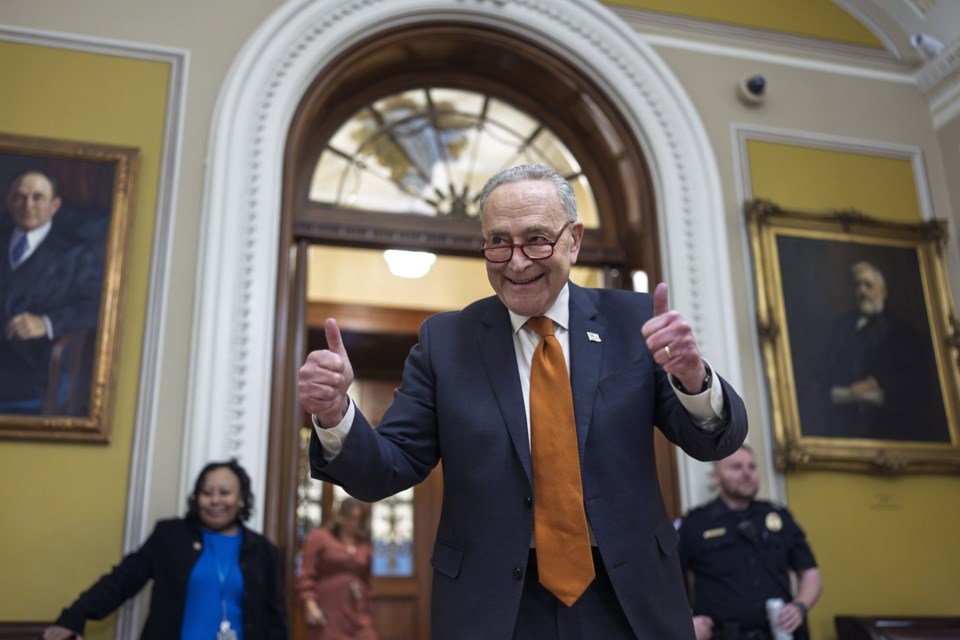
Photo: The Albertan
Trump Throws Support Behind Senate Deal as Clock Ticks Toward Shutdown
President Donald Trump on Thursday publicly endorsed a Senate agreement designed to fund most of the federal government through the end of the fiscal year, giving critical momentum to a bipartisan effort unfolding just hours before a potential partial government shutdown.
The endorsement came shortly after Senate leaders finalized a revised approach to the spending package, agreeing to remove funding for the Department of Homeland Security from the broader bill and handle it separately through a short-term extension. The remaining legislation would cover five major appropriations measures, keeping large parts of the government operating through September.
Trump praised the compromise in a social media post, urging lawmakers from both parties to support the deal and emphasizing that it would provide stability for federal operations while temporarily extending funding for DHS, including the Coast Guard.
His backing is widely seen as pivotal, especially with the shutdown deadline looming at 12:01 a.m. Saturday.
What’s in the Funding Package
The Senate’s revised plan centers on a six-bill appropriations package, with five bills now moving forward together and Homeland Security carved out for a separate stopgap.
If passed, the main package would fund a wide range of federal departments and agencies, including:
- Defense
- Treasury
- State
- Health and Human Services
- Labor
- Housing and Urban Development
- Transportation
- Education
Together, these departments account for a significant share of federal discretionary spending and employ hundreds of thousands of workers nationwide.
The Department of Homeland Security would instead receive a temporary two-week funding extension, buying lawmakers more time to negotiate its budget while avoiding an immediate lapse in operations at agencies such as Customs and Border Protection, Immigration and Customs Enforcement, FEMA, and the Coast Guard.
Democrats pushed to separate DHS after a recent incident in Minnesota in which two U.S. citizens were killed by federal immigration agents, prompting renewed scrutiny of immigration enforcement and DHS oversight.
Senate Scrambles to Move Bill Before Deadline
Senate leaders moved quickly to line up support for the revised package using a process known as “hotlining,” aimed at securing unanimous consent to fast-track the bill through the chamber.
Senate Majority Leader John Thune faces a narrow path forward, as speeding passage requires unanimous agreement in the Senate. Earlier in the day, a procedural vote on the original six-bill package failed when seven Republicans joined all Democrats in opposition, highlighting the challenge of clearing the chamber’s 60-vote filibuster threshold without strong bipartisan backing.
That setback intensified negotiations, ultimately leading to the decision to split off DHS funding.
Republican senators said Democrats had been in direct talks with the White House throughout the day, underscoring how closely the administration has been involved in shaping the final compromise.
House Must Reapprove as Timing Complicates Passage
Because the Senate altered the legislation, the House of Representatives will need to vote again on the package before it can be sent to the president’s desk.
That presents a logistical hurdle: the House is currently in recess, with members scheduled to return next week. House Speaker Mike Johnson said earlier Thursday that leadership is working to bring lawmakers back to Washington as soon as possible but warned it could take up to 72 hours to assemble a full vote.
As a result, a brief shutdown over the weekend remains possible, even if the Senate acts swiftly. Federal agencies are already preparing contingency plans, and nonessential government workers could face furloughs if funding lapses.
The stakes are high. Last year’s shutdown stretched for a record 43 days, disrupting federal services, delaying paychecks, and weighing on economic confidence.
Markets and Economy Watching Closely
Investors have been closely monitoring developments in Washington, as shutdown risks tend to rattle markets and dampen consumer and business sentiment. Trump’s endorsement helped ease immediate concerns, signaling that the White House supports the compromise and increasing the odds of eventual passage.
Economists warn that even short shutdowns can have measurable economic effects, temporarily reducing GDP growth, delaying federal contracts, and creating uncertainty for industries that depend on government spending, from defense contractors to healthcare providers.
With the fiscal year already underway and multiple funding deadlines still ahead, the current agreement is viewed as a temporary bridge rather than a long-term solution to Washington’s budget battles.
A Narrow Window to Avoid Disruption
For now, Trump’s support has injected new momentum into the Senate deal, but lawmakers are racing against the clock. The next 48 hours will determine whether Congress can finalize funding in time or whether parts of the federal government will briefly go dark.
Even if a shutdown is avoided, the two-week DHS extension ensures that budget negotiations will soon return to center stage, setting up another round of high-stakes talks as lawmakers work to resolve Homeland Security funding and broader fiscal priorities later this year.