Boom Supersonic — The Startup Bringing Supersonic Passenger Flights Back to the Skies
How Blake Scholl is building the next generation of ultra-fast commercial aircraft
Boom Supersonic – Redefining Air Travel Speed
Founded in 2014, Boom Supersonic is a U.S.-based aerospace startup developing next-generation supersonic passenger aircraft designed to cut long-haul flight times in half. The company aims to revive commercial supersonic travel, decades after the retirement of Concorde, but with improved efficiency, lower costs, and modern sustainability standards.
Boom’s flagship vision is simple but ambitious: make the world faster and more connected by enabling routine supersonic commercial flights that are economically viable and environmentally responsible.
Founding Story
Boom Supersonic was founded by Blake Scholl, a former Amazon product manager and tech entrepreneur with a background in software and aviation enthusiasm.
Scholl’s insight came from a simple observation: while computing, communication, and logistics had all accelerated dramatically in the 21st century, commercial air travel speeds had stagnated since the Concorde era ended in 2003.
With no formal aerospace engineering background, Scholl approached the problem like a software entrepreneur—breaking it into systems, iterating designs, and assembling a world-class team of aerospace engineers from Boeing, NASA, and Lockheed Martin.
His goal was not just to build a fast plane, but to rebuild the economics of supersonic travel from the ground up.
Funding and Growth Milestones
Boom Supersonic’s development has been capital-intensive, supported by venture capital and strategic aerospace partnerships:
- 2014: Founded and began early aircraft design and simulation work.
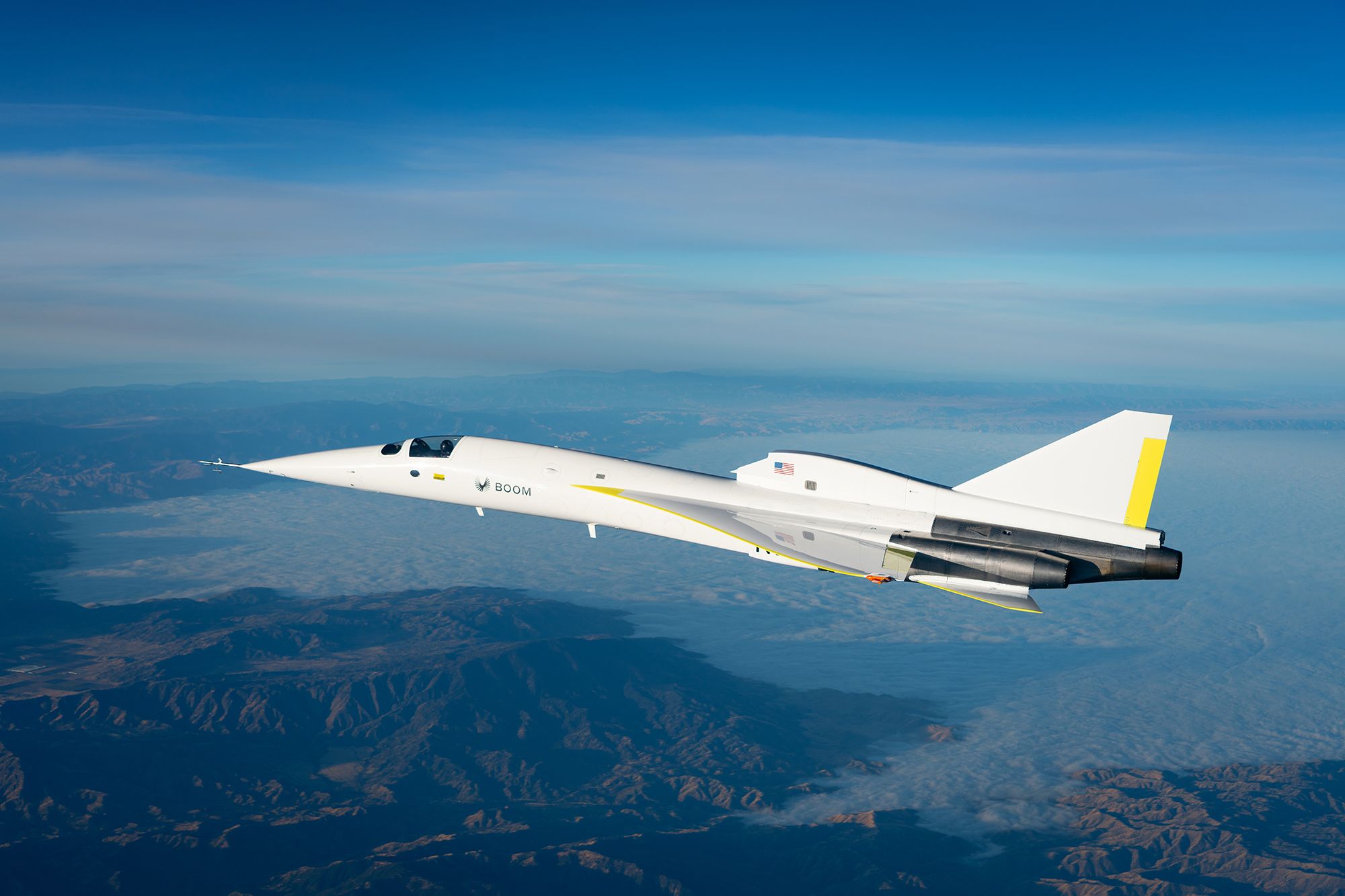
- 2016: Raised $41 million in Series A funding to build XB-1, a supersonic demonstrator aircraft.
- 2017–2019: Expanded engineering team and completed wind tunnel testing and prototype validation.
- 2020: Secured additional funding to accelerate development of Overture, its commercial airliner.
- 2021: Partnered with major airlines including United Airlines, which pre-ordered up to 15 Overture aircraft with options for more.
- 2023: XB-1 demonstrator completed taxi testing and advanced flight readiness checks.
- 2024–2025: Continued testing of supersonic systems with increasing focus on regulatory compliance and sustainable aviation fuel integration.
Boom has positioned itself as one of the most prominent private aerospace startups globally, alongside companies like SpaceX and Relativity Space.
Business Model and Technology
Boom’s strategy is centered around building and commercializing supersonic passenger aircraft:
- XB-1 Demonstrator: A smaller prototype used to validate aerodynamic and propulsion systems.
- Overture Airliner: Planned commercial aircraft designed to carry ~65–80 passengers at Mach 1.7.
- Sustainable Aviation Fuel (SAF): Designed to run entirely on SAF to reduce carbon footprint.
- Direct Airline Partnerships: Pre-orders and collaborations with airlines like United Airlines.
- Engineering Focus: Advanced aerodynamics, composite materials, and noise reduction systems to meet regulatory requirements.
The business model relies on aircraft sales to airlines rather than operating flights directly.
Market Impact
Boom Supersonic is attempting to reshape the future of aviation:
- Time Compression: Halving transoceanic travel times (e.g., New York to London in ~3.5 hours).
- Industry Revival: First credible attempt to revive commercial supersonic travel since Concorde.
- Airline Interest: Early commitments from major carriers signal potential commercial viability.
- Aerospace Innovation: Pushes advancements in propulsion, materials, and aerodynamics.
If successful, Boom could redefine premium long-haul travel and business aviation economics.
Challenges and Controversies
Despite its ambition, Boom faces significant hurdles:
- Regulatory Barriers: Supersonic overland flight restrictions due to sonic boom noise regulations.
- Technical Complexity: Balancing speed, safety, fuel efficiency, and passenger comfort.
- Economic Viability: High aircraft costs and uncertain ticket pricing model.
- Competition from Subsonic Efficiency: Modern long-haul jets are becoming more fuel-efficient and cost-effective.
The company is addressing these through quieter aerodynamic design, SAF adoption, and strategic airline partnerships.
Future Outlook
Boom Supersonic’s roadmap includes:
- First Commercial Aircraft (Overture): Targeting service entry in the late 2020s.
- Global Airline Deployment: Expanding partnerships beyond United Airlines.
- Noise Reduction Innovation: Developing “low-boom” technology for potential regulatory approval expansion.
- Sustainable Aviation Integration: Full reliance on SAF to meet environmental expectations.
Success would position Boom as a defining aerospace company of the next aviation era.
From a bold idea about making the world faster to building real supersonic prototypes, Boom Supersonic represents the frontier of modern aerospace entrepreneurship. Blake Scholl’s approach—blending startup agility with aerospace ambition—has revived interest in commercial supersonic travel. While challenges remain, Boom’s progress signals a future where intercontinental travel could once again be measured in hours rather than half-days.