Milanote — The Startup Building a Visual Workspace for Creative Thinking
How an Australian SaaS company is redefining idea organization with drag-and-drop visual boards
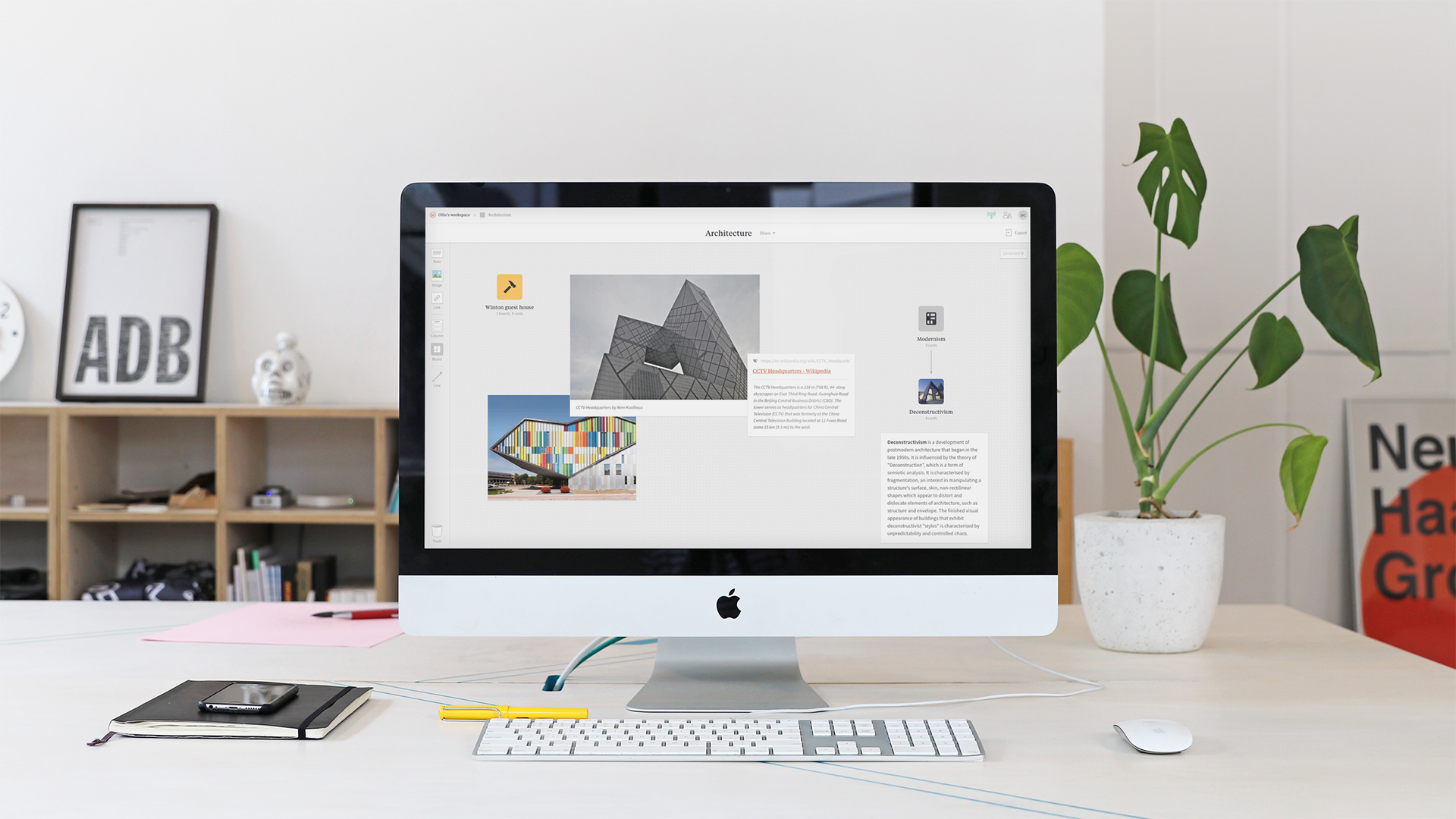
Milanote – A Visual Brain for Creatives
Founded in 2016, Milanote is a Melbourne-based software startup that provides a visual workspace platform for organizing ideas, projects, and creative work. Unlike traditional note-taking apps or project management tools, Milanote allows users to build free-form visual boards where text, images, links, files, and tasks can be arranged spatially.
The company is often described as an “Evernote for creatives” or a hybrid between Pinterest + Trello + Notion, designed specifically for designers, writers, marketers, and startups that think visually rather than linearly.
Founding Story
Milanote was created by a group of Australian designers and developers, including Ollie Campbell (CEO) and co-founders such as Michael Trounce, Brett Warren, and Marc Clancy.
The product originally began as an internal tool inside a UX/design agency. The team struggled with existing tools that were either too rigid (task-based project managers) or too text-heavy (note-taking apps).
They needed something more flexible—something that allowed ideas to be placed spatially, like a real-world mood board. That internal experiment eventually evolved into Milanote as a standalone SaaS product.
Funding and Growth Milestones
Milanote has grown steadily as a bootstrapped-leaning SaaS startup with light early funding:
- 2016: Official public launch after being developed internally in a design studio
- 2017: Raised around $780K in seed funding to scale product development
- 2018–2020: Gradual adoption among designers, freelancers, and creative teams
- 2021–2024: Expanded globally with strong adoption in creative industries
- 2026: Estimated tens of thousands of active users, used by teams at major companies like Apple, Google, Adobe, and Uber (via creative departments and contractors)
Unlike hyper-growth startups, Milanote’s strategy has been slow, product-led growth focused on niche creative users rather than mass consumer scaling.
Business Model and Technology
Milanote operates as a SaaS (Software-as-a-Service) subscription platform.
Key components of its model:
- Freemium Access: Basic usage is free with limitations on boards and storage
- Paid Subscriptions: Monthly/annual plans unlock unlimited boards, storage, and collaboration tools
- Visual Board System: Drag-and-drop interface for organizing content spatially
- Collaboration Tools: Real-time sharing, commenting, and team workspaces
- Cross-Platform Sync: Web and desktop apps with cloud-based storage
Technologically, Milanote is built around a flexible canvas architecture, allowing users to place and connect different types of content freely rather than forcing rigid structures.
Market Impact
Milanote has carved out a unique niche in the productivity software ecosystem:
- Popular among designers, UX researchers, writers, and startup founders
- Used as a “second brain” for visual thinkers
- Competes indirectly with tools like Notion, Miro, and Trello—but focuses more on creative ideation than task tracking
- Helps users bridge the gap between brainstorming and execution
Its biggest impact is not scale, but category definition: it helped normalize visual-first thinking tools in SaaS.
Challenges and Controversies
Like many niche SaaS tools, Milanote faces several challenges:
- Competition Pressure: Competes with heavily funded platforms like Notion and Miro
- Performance Trade-offs: Heavy visual boards can slow down large projects
- Mobile Limitations: Mobile experience is less powerful than desktop/web
- Pricing Sensitivity: Some users consider subscription pricing high for casual use
- Scalability vs Niche Focus: Balancing simplicity with enterprise features
Despite this, the company has maintained a loyal user base by prioritizing simplicity and creative flexibility over aggressive expansion.
Future Outlook
Milanote’s future direction is likely to focus on:
- Improved real-time collaboration features
- Better mobile and offline usability
- More integrations with creative tools (design, writing, media platforms)
- Enhanced AI-assisted organization and idea structuring
- Expansion deeper into education and creative agency markets
The platform’s long-term opportunity lies in becoming the default visual thinking layer for creative work, rather than a general productivity tool.
From an internal design tool to a global creative workspace, Milanote represents a different kind of startup story—one focused less on rapid disruption and more on deep product fit for a specific audience.
By enabling users to think visually and organize ideas spatially, Milanote has built a loyal niche in the crowded productivity software market, proving that not all successful startups need massive scale—some succeed by owning a very specific way of thinking.