Trump Signals Tariff Refund Scrutiny as Major U.S. Companies Rush to Reclaim Billions
Despite political pressure and warnings of being “remembered,” corporations including Apple, Walmart, and Nike move ahead with refund claims worth over $166 billion
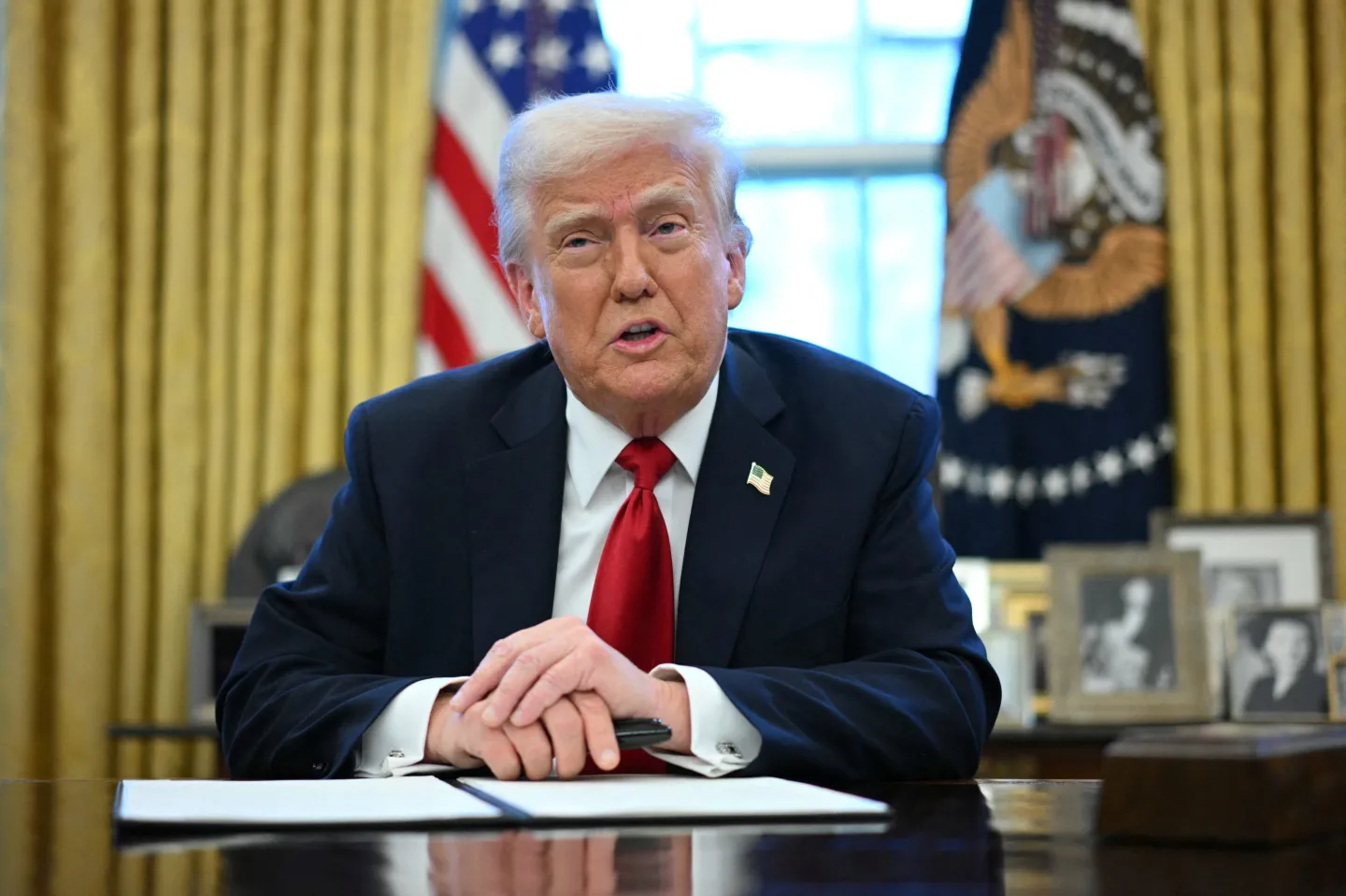
Getty Images
A growing number of America’s largest corporations are moving forward with applications to recover billions of dollars in tariff payments, even after President Donald Trump warned he would “remember” companies that choose to pursue refunds.
The situation has created a delicate balancing act for U.S. businesses, as they weigh financial recovery against potential political and regulatory consequences tied to their decisions.
While some firms initially hesitated, citing concerns over political backlash, most major import-heavy corporations have now opted to proceed with claims that could collectively reach more than $166 billion in potential refunds.
Major Corporations Move Ahead Despite Political Warning
Earlier comments from President Donald Trump added uncertainty to the process after he suggested he would take note of companies that chose not to request tariff reimbursements following a Supreme Court ruling that struck down portions of previously imposed global duties.
That remark briefly slowed internal discussions at several multinational firms, with some companies reportedly weighing reputational risks before submitting claims.
However, that hesitation has largely faded.
Companies including:
• Walmart
• Apple
• Nike
• Home Depot
• General Motors
• FedEx
• Costco
have all either confirmed participation in the refund process or initiated steps to recover payments made under tariffs classified as IEEPA-related duties.
The shift highlights how financial incentives are outweighing political caution, especially when the potential recoveries could reach into the billions for individual corporations.
Billions Already Processed, With More Still Owed
According to filings from U.S. Customs and Border Protection, more than $35 billion in tariff refunds have already been processed and distributed to businesses.
However, the total outstanding amount is significantly larger, with estimates suggesting roughly $166 billion in additional refunds may still be owed across eligible claims.
The scale of the reimbursements has turned the issue into one of the largest ongoing corporate recovery efforts in recent years, drawing attention from both policymakers and industry groups.
For many companies, participation is not optional from a financial governance standpoint. Executives and boards are under pressure to recover overpaid duties to maximize shareholder value and maintain competitive cost structures.
Walmart and Other Retail Giants Lead the Push
Among the most closely watched participants is Walmart, the largest U.S. retailer, which has confirmed it is actively pursuing tariff refunds.
Walmart’s finance leadership noted that the refundable portion tied to its eligible imports represents roughly half of one percent of its U.S. sales base. Based on annual U.S. revenue levels, that figure could translate to approximately $2.4 billion in potential recovery.
While significant in absolute terms, Walmart executives have described the amount as relatively modest compared to the company’s total global revenue exceeding $700 billion annually.
The retailer has also indicated that any recovered funds would likely be directed toward pricing strategies aimed at shielding consumers from inflationary pressure, rather than boosting profit margins.
This approach reflects a broader industry trend in which companies are framing tariff refunds as a tool to stabilize pricing in a cost-sensitive consumer environment.
Businesses Seek Strategic Use of Refund Funds
Across corporate America, companies are increasingly signaling that any recovered tariff funds will be deployed strategically rather than treated as windfall profit.
Common intended uses include:
• Stabilizing retail prices
• Absorbing supply chain cost increases
• Supporting reinvestment in domestic operations
• Improving manufacturing capacity
• Funding innovation initiatives
Apple, for example, has indicated that any recovered tariff funds would be directed toward U.S.-based innovation and advanced manufacturing efforts, aligning with long-standing policy priorities around domestic production.
This approach allows companies to both justify participation in refund claims and reduce potential political friction.
Early Political Concerns Have Not Stopped Applications
Initial hesitation from several companies reflected uncertainty about how the administration might respond to widespread refund claims.
At one point, internal discussions reportedly included concerns that seeking refunds could be interpreted as politically adversarial.
However, that caution has not translated into widespread withdrawal from the process.
Even companies that initially paused are now proceeding, driven by fiduciary obligations and the scale of potential financial recovery.
Some businesses that had delayed applications are now accelerating filings as legal clarity improves and refund mechanisms become more defined.
Retailers and Manufacturers Adjust Pricing Strategies
Several major retailers have also linked tariff refunds to broader pricing strategies.
Executives at companies such as Target and Home Depot have confirmed participation in the refund process, with some indicating that recovered funds could help offset rising import costs.
Home Depot has already received a limited amount of tariff reimbursements but expects broader financial offsets if additional claims are approved.
Industry-wide, businesses are increasingly treating tariff refunds as a buffer against cost inflation rather than a direct profit driver.
Lobbying Groups Highlight Practical Business Incentives
Trade organizations and business advocacy groups have emphasized that companies are primarily responding to financial logic rather than political signaling.
According to industry policy representatives, many firms see tariff refunds as a straightforward recovery of overpaid duties rather than a discretionary decision.
In many cases, importers are legally required to pursue refunds where eligibility exists, reinforcing the idea that fiduciary responsibility outweighs reputational concerns.
This has contributed to widespread participation across multiple sectors, including retail, automotive, logistics, and consumer goods.
Some Companies Remain Non-Committal
Despite broad participation, not all major corporations have publicly confirmed their intentions.
Amazon has not officially commented on whether it will pursue tariff refunds, drawing scrutiny from analysts and legal challenges questioning its position.
Meanwhile, some firms such as Lowe’s have stated they are still evaluating the situation and have not finalized their approach.
Executives at these companies have emphasized that they are monitoring regulatory developments closely before making final decisions.
A Large-Scale Corporate Financial Rebalancing
The tariff refund process has evolved into one of the largest corporate financial recalibrations in recent years.
With billions already distributed and significantly more still under review, the outcome is expected to reshape import cost structures for major U.S. businesses.
At the center of the issue remains a tension between financial recovery, political messaging, and long-term trade policy uncertainty.
While the political rhetoric surrounding the issue has created noise, corporate behavior suggests a clear outcome: large companies are prioritizing financial recovery over political hesitation, particularly when billions of dollars are at stake.