Automation Takes Over Europe
Labor Shortages Fuel a Technology Boom
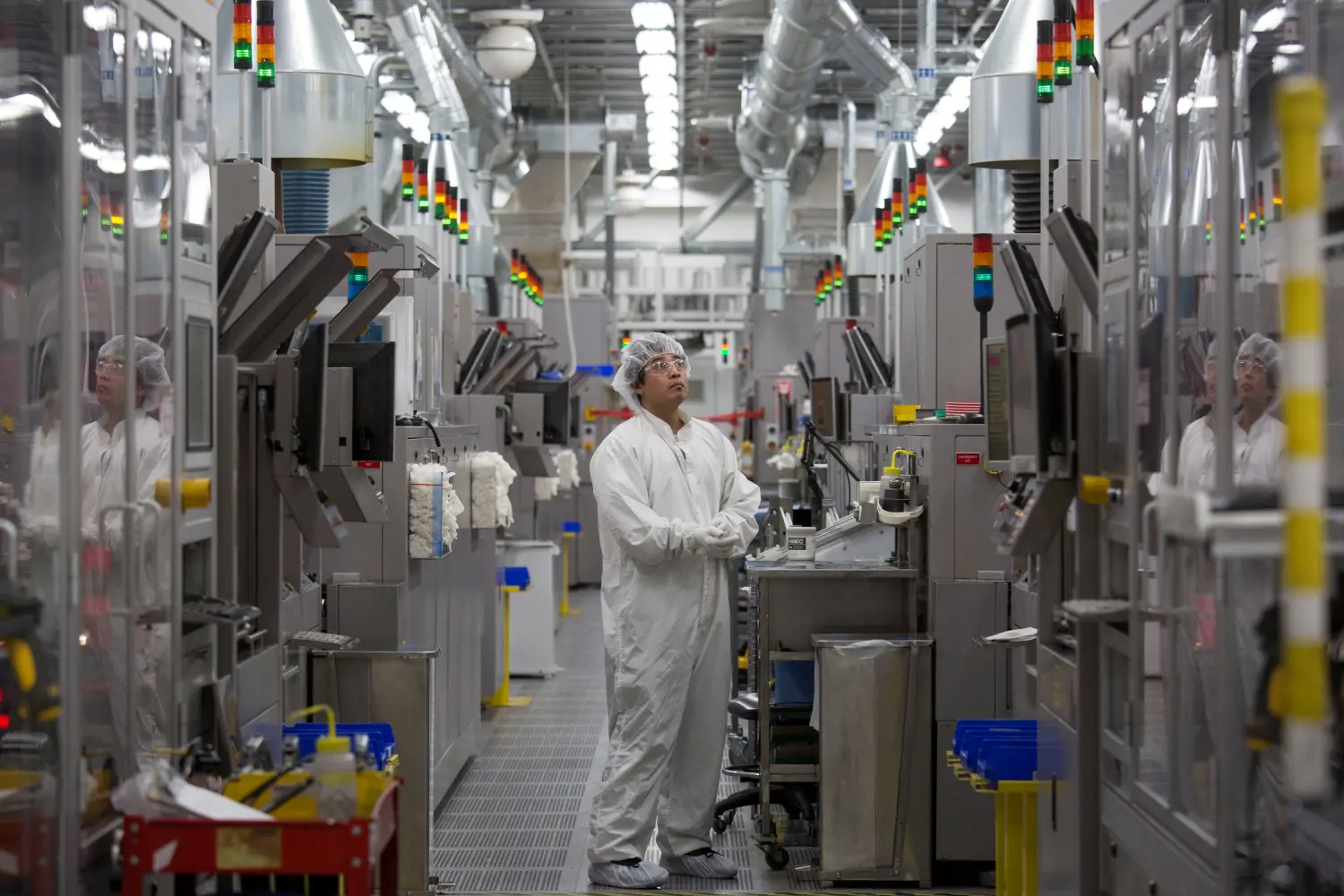
Across Europe, industries are facing a crisis: a dwindling workforce struggling to keep up with growing demand. From manufacturing plants in Germany to logistics hubs in France, companies are confronting a harsh reality—there simply aren’t enough human hands to sustain operations. This labor gap has ignited a surge in automation services, creating a multi‑billion dollar market as businesses turn to cutting-edge robotics, AI-driven software, and process automation to stay competitive. What began as a cost-saving solution has transformed into a strategic necessity, redefining how Europe works and producing opportunities for technology providers on an unprecedented scale.
Factories and Warehouses Reimagined
Robotic arms glide across assembly lines with flawless precision, automated guided vehicles navigate sprawling warehouses, and AI-powered systems predict maintenance needs before breakdowns occur. Traditional operations that once required dozens of workers now run efficiently with a fraction of the human workforce. For companies, this shift is not merely operational—it’s transformative. Production speeds increase, errors are minimized, and supply chains stabilize, all while allowing executives to redirect human talent toward more strategic, creative, and oversight-focused roles. The labor shortage has inadvertently accelerated a technological revolution, and Europe’s businesses are reaping the rewards.
Service Sectors Join the Automation Wave
It’s not just factories feeling the pinch. Retail, hospitality, and healthcare sectors are embracing automation to fill critical workforce gaps. Self-service kiosks, AI chatbots, and robotic assistants are becoming standard, providing seamless customer experiences while compensating for staff shortages. Hospitals are deploying robotic surgery aids and automated diagnostic tools to maintain care quality amidst a constrained labor pool. Even agriculture is seeing transformative change, with drones, automated harvesters, and AI monitoring systems stepping in where human labor is scarce. Automation has evolved from a niche tool to an essential pillar of Europe’s economic resilience.
Investment Surges and Market Growth
The urgency created by labor shortages has caught the attention of investors worldwide. Venture capital is pouring into startups developing advanced robotics, AI solutions, and workflow automation platforms. Market analysts now estimate that Europe’s automation services sector is generating tens of billions in revenue, with projections pointing toward explosive growth over the next decade. Companies are not only adopting technology—they are actively seeking innovations that can future-proof their operations, create new efficiencies, and maintain competitiveness in a region increasingly defined by demographic shifts and workforce constraints.
A Future Shaped by Machines and Human Strategy
As automation becomes the backbone of European industry, the line between human labor and machine intelligence is blurring. The shortage of workers has forced businesses to rethink roles, emphasizing oversight, problem-solving, and creative decision-making over repetitive tasks. This evolution is reshaping corporate culture, workforce expectations, and the very nature of employment across the continent. Europe’s multi‑billion dollar automation services market is more than a financial opportunity—it represents a paradigm shift where technology and human ingenuity coexist, building a resilient economy prepared to meet the challenges of tomorrow.
Robotics in Everyday Life
Automation is no longer confined to factories or warehouses. European cities are beginning to integrate intelligent systems into everyday operations, from autonomous delivery robots navigating busy streets to AI-driven traffic management that keeps cities moving efficiently. Restaurants deploy robotic chefs capable of preparing meals with perfect consistency, while hotels use automated check-in systems and smart room controls to enhance guest experiences. These innovations aren’t just efficiency tools—they are redefining convenience and setting new expectations for quality and precision, bridging the gap created by the shrinking workforce.
AI-Powered Decision Making
Beyond physical labor, artificial intelligence is transforming strategic operations. Predictive analytics, machine learning algorithms, and decision-support systems are helping executives forecast demand, optimize supply chains, and even anticipate employee shortages before they occur. In sectors like finance, logistics, and manufacturing, AI can process vast amounts of data faster than human teams, identifying inefficiencies and opportunities with unprecedented accuracy. The result is a hybrid model where humans focus on creative, critical, and leadership-driven tasks, while machines handle repetitive or data-intensive functions—maximizing productivity while addressing labor constraints.
The Socioeconomic Ripple Effect
The automation boom is not only reshaping businesses—it is transforming Europe’s labor market and economy. While some traditional roles are shrinking, entirely new job categories are emerging in AI programming, robotics maintenance, and automation consultancy. Governments and industries are investing heavily in reskilling programs, ensuring workers can transition into higher-value roles. The multi‑billion dollar automation services market is creating a cycle where technology compensates for shortages, drives innovation, and generates new economic opportunities, making Europe a global leader in both industrial efficiency and tech-driven workforce evolution.
Smart Factories as Living Ecosystems
Today’s automated factories in Europe are no longer mere production centers—they resemble living, interconnected ecosystems. Sensors track every machine’s performance in real time, drones inspect vast storage areas, and robotic arms work in flawless coordination as if guided by a single mind. The hum of machinery blends with the occasional human oversight, creating a rhythm that is both precise and mesmerizing. Floors once crowded with workers are now open spaces where engineers and supervisors monitor AI dashboards, adjusting parameters to optimize efficiency. In these environments, technology does not replace human ingenuity—it amplifies it, allowing companies to produce more with less while maintaining unprecedented quality and consistency.
Automation Bridging the Skills Gap
As Europe’s aging population intensifies labor shortages, automation is filling gaps that no recruitment drive could solve. Skilled workers are increasingly scarce, but machines can perform repetitive, physically demanding, or dangerous tasks with unwavering reliability. From welding and packaging to inventory management and quality inspections, automation ensures continuity even in sectors struggling to find talent. Meanwhile, human employees are being redeployed to high-value roles—training algorithms, designing workflows, and interpreting data to drive business decisions. This shift creates a new synergy between human creativity and machine efficiency, transforming industries into lean, resilient, and future-ready enterprises.
A Vision of Europe’s Automated Future
Looking ahead, automation is poised to redefine not only the workplace but the very fabric of European society. Imagine fully automated ports, drone-driven logistics across cities, AI-assisted healthcare facilities, and factories that run seamlessly around the clock. Workers will no longer be tied to repetitive tasks but will become overseers, innovators, and strategists—roles that demand critical thinking, creativity, and emotional intelligence. The multi-billion-dollar automation services market is not just a temporary response to labor shortages; it is laying the foundation for a continent where efficiency, resilience, and technological sophistication define the new normal. Europe is quietly becoming a laboratory for the future of work, demonstrating how societies can adapt, innovate, and thrive in the age of intelligent machines.
Automation as a Catalyst for Innovation
Labor shortages are forcing European companies to rethink how work is done, and automation is emerging as a powerful catalyst for innovation. Businesses are no longer simply replacing human tasks with machines—they are redesigning entire processes from the ground up. Production lines are being optimized with AI-driven predictive models, warehouses are configured for seamless robot navigation, and supply chains are becoming hyper-efficient through real-time data monitoring. This transformation allows companies to experiment with new products, expand services faster, and respond to market fluctuations with agility that was impossible in a fully human-driven system. What started as a necessity has become a competitive advantage, propelling Europe to the forefront of technological advancement.
The Human-Machine Partnership
Despite the rapid rise of robotics and AI, human expertise remains indispensable. Engineers, technicians, and analysts are now the strategic core of operations, collaborating with machines in ways that amplify human creativity and decision-making. Employees oversee complex systems, troubleshoot anomalies, and design smarter workflows, creating a symbiotic relationship between human insight and machine precision. In this partnership, workers are freed from monotonous labor and empowered to focus on innovation, critical thinking, and leadership. The labor shortage has, paradoxically, given humans the opportunity to operate at the height of their capabilities, supported by technology that enhances rather than replaces their contributions.
Regional Variations and Strategic Opportunities
Automation adoption is not uniform across Europe, and this uneven rollout is creating unique opportunities for investment and innovation. Northern and Western European countries are leading with highly automated manufacturing hubs and smart logistics networks, while Eastern regions are adopting scalable solutions tailored to local workforce realities. Governments are offering incentives for automation implementation, and cross-border collaboration is fostering a dynamic ecosystem of robotics developers, AI innovators, and tech-driven service providers. As companies and nations race to optimize productivity, Europe’s multi-billion-dollar automation market continues to expand, proving that technology can not only fill workforce gaps but also drive economic growth, regional competitiveness, and a new standard of operational excellence.
Transforming Traditional Industries
Longstanding European industries, from automotive manufacturing to food processing, are being revolutionized by automation. Entire assembly lines once reliant on human labor now hum with robotic precision, producing goods faster, cleaner, and with fewer errors. In breweries and bakeries, machines handle repetitive tasks like mixing, packaging, and quality inspection, allowing artisans to focus on innovation and flavor experimentation. Even textile factories employ AI-powered machines that adjust patterns, fabrics, and cuts on the fly, delivering products that combine speed with impeccable craftsmanship. Automation is no longer a substitute for labor—it is a tool that elevates quality, creativity, and efficiency across centuries-old industries.
Automation Driving Workforce Evolution
As machines take over repetitive and physically demanding tasks, the European workforce is evolving in parallel. Employees are being retrained for high-value roles that emphasize technology management, data analysis, and process design. Universities and vocational programs are increasingly aligning curricula with the skills required to operate and maintain AI-driven systems and robotic platforms. This shift is not only addressing labor shortages but also creating a workforce that is more adaptable, technically proficient, and capable of thriving in an economy where human intelligence and machine efficiency work in tandem. The labor crisis has, in essence, accelerated the professional upskilling of Europe’s workforce.
A New Standard for Operational Excellence
The widespread adoption of automation is setting a new benchmark for operational performance. Companies can maintain production around the clock, anticipate maintenance issues before they arise, and optimize logistics in real time, achieving a level of consistency and reliability that was previously unattainable. Customer demands are met faster, quality standards are upheld without compromise, and businesses are more resilient against external shocks such as economic fluctuations or workforce disruptions. The multi-billion-dollar automation services market is more than a temporary trend—it represents a structural shift in European industry, where technology not only fills gaps but creates an entirely new standard for how work is conceptualized, executed, and scaled.
Europe’s Automated Horizon
Looking toward the future, Europe is poised to become a living laboratory of intelligent work. Cities pulse with invisible networks of AI, warehouses hum with coordinated robotics, and factories operate with a level of precision that blends human oversight with machine perfection. The labor shortages that once threatened productivity have now sparked a transformation—one where human creativity, problem-solving, and strategic insight are amplified rather than replaced by technology. Every robot, sensor, and algorithm contributes to a continent-wide symphony of efficiency, productivity, and innovation, creating workplaces that are both smarter and more resilient than ever before.
Redefining the Role of Human Talent
In this new era, humans are no longer measured by hours worked but by their ability to lead, innovate, and interpret the insights that machines generate. Engineers monitor networks of autonomous machines, data analysts uncover patterns invisible to the naked eye, and managers design workflows that integrate AI into the heart of every operation. Even in a world dominated by automation, human intelligence and judgment remain irreplaceable. The labor shortages that once seemed like a threat have become a catalyst for redefining the workforce, turning constraints into opportunities for growth, skill development, and unprecedented collaboration between man and machine.
A Continental Transformation in Motion
Ultimately, Europe’s multi-billion-dollar automation market is not merely a reaction to labor scarcity—it is a glimpse into a future shaped by innovation, resilience, and foresight. Entire industries are evolving, supply chains are becoming agile, and businesses are achieving levels of operational excellence once thought impossible. Across the continent, from the bustling ports of Rotterdam to the high-tech manufacturing hubs of Bavaria, automation is laying the foundation for a new economic paradigm. It is a world where labor shortages no longer limit growth, where human ingenuity and intelligent systems coexist in perfect harmony, and where Europe is setting the global standard for a future defined by technological sophistication, strategic vision, and boundless opportunity.
Continue reading with MarketSpy Premium
This is a premium report. Unlock the full story and the entire archive for just $1 per week.
- Unlimited access to every premium report
- Exclusive deep-dive analysis and research
- Ad-light reading and the full MarketSpy archive
- Cancel anytime